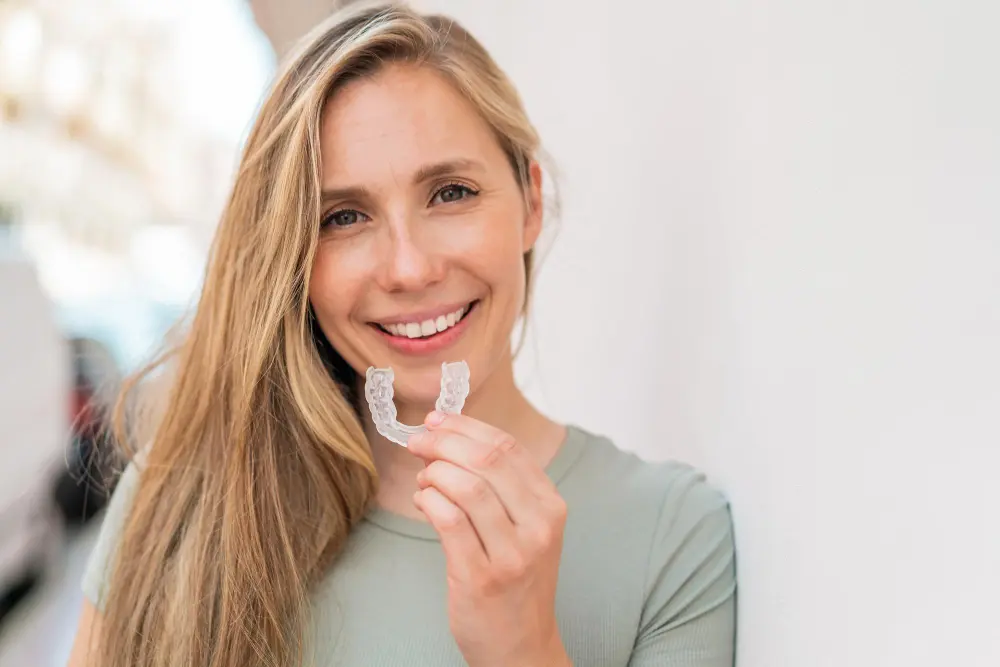
How Invisalign Works
Invisalign treatment uses advanced 3D imaging and computer modeling to map the precise movements each tooth needs to make from start to finish. This digital treatment plan is translated into a series of aligner trays, each designed to move the teeth a fraction of a millimeter closer to their target position.
Custom Aligners for Every Stage
Each set of Invisalign trays is worn for one to two weeks before switching to the next set. The aligners apply gentle, continuous pressure to specific teeth at each stage, guiding them into alignment according to the digital plan. This staged approach matters because it allows the teeth and surrounding bone to adapt gradually, reducing discomfort and supporting stable results.
SmartTrack Material and Precision
Invisalign aligners are made from a proprietary thermoplastic material called SmartTrack, designed for a snug, comfortable fit that delivers consistent force. The material is smooth, BPA-free, and nearly invisible when worn. Precision-cut edges follow the contour of the gumline for a more comfortable fit than generic clear aligners.
What Invisalign Can Correct
Invisalign is effective for a wide range of orthodontic concerns, from mild spacing issues to moderate bite problems.
Crowding and Spacing
Teeth that overlap or have gaps between them respond well to Invisalign treatment. The aligners gradually shift each tooth into its correct position, closing gaps and relieving crowding so that the teeth sit evenly across the arch. Properly spaced teeth are easier to brush and floss, which is why correcting crowding also improves long-term oral health.
Overbite, Underbite, and Crossbite
Invisalign can correct mild to moderate bite misalignments that affect the way the upper and lower teeth meet. Overbites, underbites, and crossbites that go untreated can lead to uneven wear, jaw discomfort, and difficulty chewing. Correcting these issues distributes bite forces evenly because each tooth begins to engage its opposing tooth at the proper angle.
Cases That May Need Traditional Braces
Severe crowding, complex rotations, large vertical discrepancies, and significant skeletal bite issues may require traditional orthodontic treatment with brackets and wires. The dentist evaluates each case individually to recommend the most effective approach.
The Invisalign Treatment Timeline
Treatment length varies based on the complexity of the case, but most patients complete Invisalign in 6 to 18 months.
Consultation and Digital Scan
The process begins with a comprehensive consultation that includes digital scans or impressions. The dentist uses these records to create a 3D treatment simulation showing the projected tooth movements from start to finish. Patients can preview their expected results before committing to treatment, which is why the consultation is a valuable decision-making step.
Active Treatment
During active treatment, patients wear the aligners for 20 to 22 hours per day, removing them only for eating, drinking anything other than water, brushing, and flossing. Check-up visits every six to eight weeks allow the dentist to monitor progress and provide the next sets of aligners.
Attachments and Refinements
Some cases require small, tooth-colored attachments bonded to certain teeth to help the aligners grip more effectively during specific movements. These attachments are barely noticeable and are removed once they are no longer needed. If the teeth are not tracking perfectly at the end of the initial series, refinement aligners address any remaining discrepancies. These steps ensure the final result matches the original treatment plan because precision at every stage builds toward an accurate outcome.
Living With Invisalign
One of the biggest advantages of Invisalign is the minimal disruption to daily life compared to traditional braces.
Eating and Drinking
Because the aligners are removable, there are no dietary restrictions. Patients simply remove the trays before meals and snacks, enjoy their food, then brush before reinserting the aligners. This freedom matters because it eliminates one of the most common frustrations patients experience with fixed braces.
Oral Hygiene
Maintaining oral hygiene during Invisalign treatment is straightforward. Patients brush and floss normally after removing the aligners. Cleaning the trays themselves takes just a minute with a soft toothbrush and lukewarm water. Consistent hygiene during treatment supports better outcomes because it prevents cavities and gum inflammation that could interrupt the treatment timeline.
Comfort and Appearance
Invisalign aligners are smooth and do not irritate the cheeks or lips the way brackets and wires sometimes can. Most people cannot tell a patient is wearing them, even in close conversation. Some patients experience mild pressure when switching to a new set of trays, which is a sign that the teeth are moving as planned.
Invisalign vs. Traditional Braces
Both Invisalign and braces produce excellent results when matched to the right case. The choice often comes down to case complexity and personal preference.
Aesthetics and Convenience
Invisalign offers a nearly invisible appearance and the convenience of removability. Braces are always present and require more careful cleaning around brackets and wires. For patients who prioritize discretion — especially working professionals — Invisalign is often the preferred choice.
Effectiveness
Braces remain the gold standard for complex orthodontic cases involving severe crowding, significant rotations, or large bite discrepancies. Invisalign handles mild to moderate cases with equal effectiveness and continues to expand its range with each generation of technology. The dentist recommends the option that is most likely to produce the best clinical result for each individual patient.