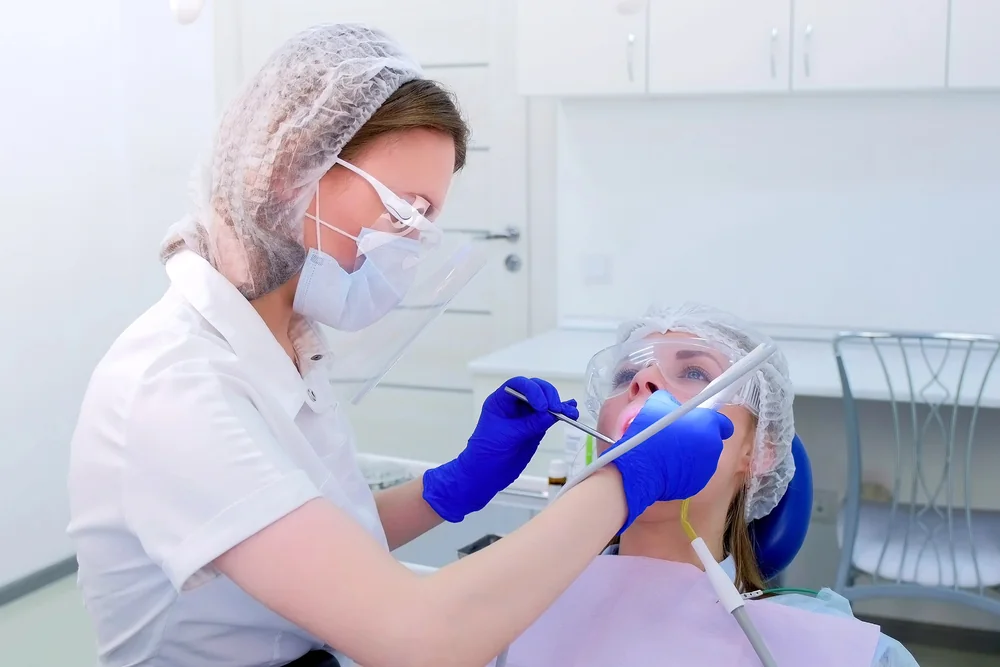
A dental deep cleaning, known clinically as scaling and root planing, is a nonsurgical gum treatment. It clears hardened deposits out of the space between gum and tooth, then leaves the root surface smooth so inflamed tissue can settle. A regular cleaning is preventive care for gums that are healthy, with work concentrated on the crowns of the teeth and the shallow area just under the gum edge. Dentists usually suggest the deeper version only after probing, imaging and an exam point to periodontitis.
Why Would a Dentist Suggest a Deep Cleaning?
Gum problems begin with plaque, a bacterial layer that keeps building on teeth every day. The American Dental Association (ADA) MouthHealthy resource explains that the mild form, gingivitis, can usually be turned around with an office cleaning plus good home habits. Periodontitis is the more serious form, in which the bone and tissue anchoring the teeth begin to break down.
Plaque left in place mineralizes into tartar, also called calculus. MedlinePlus explains that the irritation it causes can widen the small gap around each tooth into a pocket that holds germs and keeps the damage going. A toothbrush and floss cannot clear calculus from inside those pockets, so the job falls to the dental team.
Many people feel nothing at all, and the problem shows up at a checkup. Changes worth reporting include:
- Bleeding while you brush or clean between teeth
- Gum color that has turned darker red, or puffiness and soreness
- Teeth that look longer because the gum has receded
- A sour taste or breath odor that does not clear
- Adult teeth that feel loose, drift apart or meet differently
How Does the Dentist Decide?
Measurements, not looks, drive the recommendation. According to the National Institute of Dental and Craniofacial Research (NIDCR), a thin measuring instrument is slipped gently along each tooth to check pocket depth. Readings of 1 to 3 millimeters are typical for healthy gums, and larger numbers can suggest periodontal disease. Images reveal how much bone remains, and health history questions flag risks such as smoking or diabetes.
Oakwood's dental X-rays page notes that imaging can show bone loss linked to periodontal disease that is not visible in the chair.
Regular Cleaning vs. Deep Cleaning
| Regular cleaning | Deep cleaning | |
|---|---|---|
| Goal | Keep healthy gums healthy | Treat active periodontitis |
| Where the work happens | Visible tooth surfaces and the shallow margin under the gum | Root surfaces deep in the pockets |
| Anesthetic | Rarely needed | Commonly given |
| Scheduling | Usually a single visit | May be split by area of the mouth |
| Afterward | Routine checkups | A recheck, then closer maintenance |
Dental plans often code the two services differently, so out-of-pocket costs may not match a preventive visit. Having benefits checked ahead of time avoids surprises.
What Happens During the Appointment?
The scaling step lifts calculus and bacterial film off the teeth and out of each pocket. Planing follows, polishing the roots so germs have fewer rough spots to cling to and the gum can tighten back against the tooth. MedlinePlus acknowledges that working on inflamed gums can be uncomfortable and that numbing is often used.
The NIDCR adds that a medicated rinse may be prescribed and home cleaning reviewed. If pockets stay deep after nonsurgical care, surgery may be discussed as a separate step.
Recovery and Aftercare
Gums are often a little sore or sensitive for several days. MedlinePlus says bleeding and tenderness should resolve within 3 to 4 weeks. Helpful habits during that time:
- Brush with a soft brush, angling gently toward the gum edge
- Resume flossing or interdental brushes as comfort returns
- Pick softer meals for a day or two if chewing is sore
- Follow any rinse instructions exactly
- Skip tobacco, a well-known gum disease risk
As swelling fades, gums may sit a bit lower and cold may sting for a while. Call the office for increasing pain, swelling or fever.
Keeping Gum Disease Under Control
Periodontitis is long-term: treatment can control it but does not cure it, and it can flare again if plaque returns. MedlinePlus suggests cleanings as often as every 3 months for people with periodontitis, though the right interval is set for each patient based on how the gums respond. These visits clear new buildup and track whether pockets are shrinking.
Risks named by the ADA, such as diabetes, tobacco, pregnancy, family history, crowded teeth and some medicines, can justify closer monitoring. The Oakwood Dental & Implants general dentistry page also says patients with active gum disease may need to be seen more often.
Stable gums help restorations too. Inflammation around dental crowns or bridges lets bacteria gather at their edges, so healthy tissue supports longer-lasting work.
Frequently Asked Questions
Should medications be stopped before a deep cleaning?
No. Do not stop any prescription, including a blood thinner, without guidance from the prescriber. Give the dental office a full list of medicines and supplements so the dentist can decide whether to consult the prescribing doctor. Certain drugs, including some seizure medicines, calcium channel blockers and steroids, appear on the ADA's list of gum disease risks, which makes that list useful for planning.
Does diabetes change how gum disease is treated?
The NIDCR counts diabetes among the factors that raise gum disease risk, which is why it comes up in the health history. Sharing current blood sugar control and recent changes helps the dentist plan the visit, follow-up and monitoring. Managing the diabetes itself remains with the patient's physician.
Can a deep cleaning be done during pregnancy?
Yes. The ADA's pregnancy guidance considers this treatment safe for expectant patients who develop periodontitis. Share the due date when booking so chair position, anesthetic and appointment length can be adjusted for comfort.
Will cavities still need fillings after a deep cleaning?
Yes. The gum treatment addresses the pockets and roots, whereas a cavity is decay within the tooth that has to be repaired on its own. The dentist may sequence the two, such as calming inflamed gum tissue before restoring a tooth near the gum edge, but neither replaces the other.
Is it reasonable to get a second opinion on a deep cleaning?
Yes, as with any recommended treatment. Request the periodontal chart showing each tooth's measurements and any recent X-rays, so a second dentist can review the same findings without repeating everything. Avoid letting the decision drag on, since active disease can keep advancing.
Gum Health Care at Oakwood Dental & Implants
Oakwood Dental & Implants provides general dentistry, including professional cleanings and exams that check the teeth and gums, at offices in Oakwood and Lawrenceville, Georgia. To have bleeding or tender gums evaluated and discuss next steps, request an appointment.
For the Oakwood office, call (770) 534-1816 or view the Oakwood office on Google. For the Lawrenceville office, call (470) 508-0550 or get directions on Google.