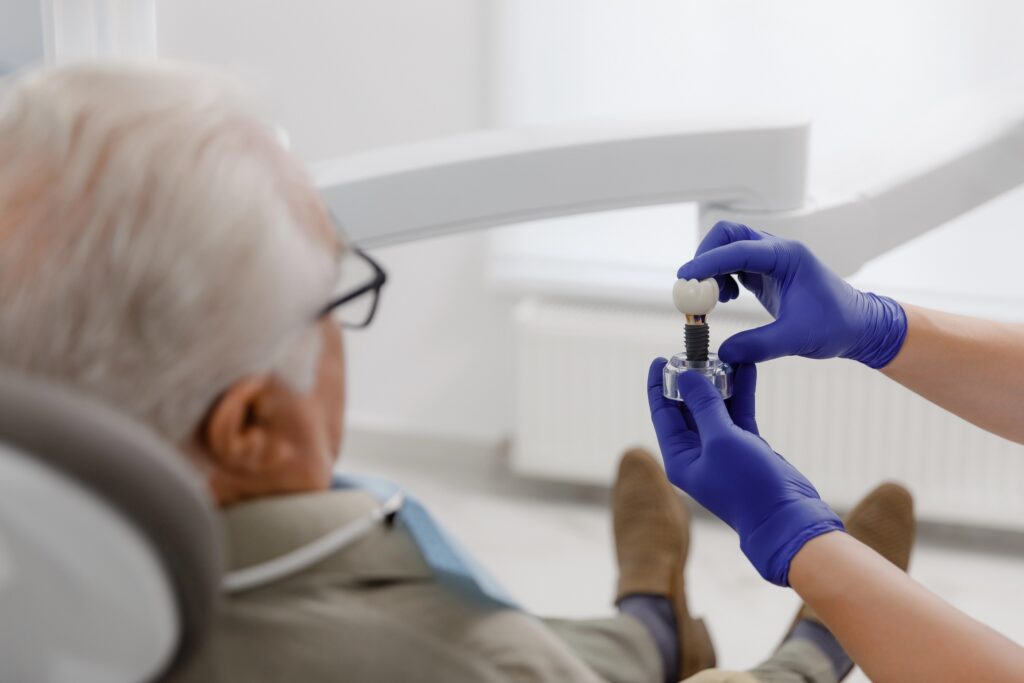
A Permanent Solution for Missing Teeth
A missing tooth affects more than appearance. It changes the way a person chews, speaks, and smiles, and the jawbone beneath the gap begins to lose density almost immediately. For patients looking for a replacement that functions, feels, and looks like a natural tooth, dental implants offer the closest match to what nature originally provided. Understanding how implants work, who qualifies, and what the timeline involves helps patients make a confident decision about restoring their smile.
What Are Dental Implants
A dental implant consists of three components: a titanium post that serves as an artificial tooth root, an abutment that connects the post to the restoration, and a custom crown that replicates the visible portion of the tooth. The post integrates with the jawbone through a biological process called osseointegration, which is why dental implants are the only tooth replacement option that preserves bone density at the site of the missing tooth.
Single Tooth Implants
A single implant replaces one missing tooth without altering or relying on the neighboring teeth. Unlike a dental bridge , which requires preparation of the adjacent teeth, a single implant stands independently. This independence preserves the integrity of healthy surrounding teeth and simplifies future dental care.
Implant-Supported Bridges and Dentures
Multiple missing teeth can be replaced with implant-supported bridges or full-arch implant dentures . Instead of placing one implant per missing tooth, strategic implant placement supports a larger prosthesis. Implant-supported dentures eliminate the slipping and adhesive issues associated with traditional removable dentures because the implants lock the prosthesis firmly in place.
Who Is a Candidate for Dental Implants
Most adults in good general health are potential candidates. The dentist evaluates several factors during the consultation to determine whether implants are the best path forward.
Bone Density and Volume
Adequate jawbone density is essential for implant stability. Patients who have experienced bone loss from prolonged tooth absence or gum disease may need a bone grafting procedure before implant placement. Bone grafting rebuilds the foundation that the implant needs, which is why it is a common preparatory step rather than a barrier to treatment.
Overall Health Considerations
Uncontrolled diabetes, active gum disease, and heavy tobacco use can impair healing and reduce implant success rates. These conditions do not automatically disqualify a patient, but they must be managed before surgery. The dental team reviews medical history thoroughly because identifying and addressing risk factors early improves long-term outcomes.
The Dental Implant Process
Implant placement is a phased process that spans several months. Each phase serves a specific purpose in building a strong, lasting restoration.
Consultation and Treatment Planning
The first visit includes a comprehensive examination, 3D imaging, and a review of individual goals and medical history. The dentist uses the imaging data to plan the exact position, angle, and depth of each implant. This precision matters because accurate placement maximizes bone contact and ensures the final crown looks and functions naturally.
Implant Placement Surgery
The titanium post is placed into the jawbone under local anesthesia. The procedure typically takes 30 to 60 minutes per implant. Most patients report that the experience is more comfortable than they expected, comparing it to having a tooth extraction . A temporary restoration may be placed to maintain aesthetics during the healing phase.
Osseointegration and Healing
Over the next three to six months, the jawbone grows around and bonds with the titanium post. This integration creates a stable anchor that can withstand normal chewing forces. Patients follow specific dietary guidelines during this phase because protecting the implant site during osseointegration is essential for long-term success.
Abutment and Crown Placement
Once osseointegration is complete, the dentist attaches the abutment to the implant post. Impressions or digital scans are taken to fabricate a custom crown that matches the shade, shape, and contour of the surrounding teeth. The final crown is then secured to the abutment, completing the restoration.
Dental Implants vs. Other Tooth Replacement Options
Understanding how implants compare to dental bridges and traditional dentures helps patients choose the option that best fits their needs.
Implants vs. Bridges
A dental bridge requires the adjacent teeth to be prepared and crowned to support the prosthetic tooth. An implant preserves those adjacent teeth entirely. Implants also prevent bone loss at the missing tooth site, while bridges do not stimulate the underlying bone, which is why bone resorption can continue beneath a bridge over time.
Implants vs. Removable Dentures
Traditional removable dentures rest on the gum ridge and may shift during eating or speaking. Dental implants are fixed in place, eliminating movement and the need for adhesives. Implant-supported restorations also restore nearly full chewing capacity, while conventional dentures typically restore only a fraction of natural bite force.
Caring for Dental Implants
Dental implants require the same level of care as natural teeth. Consistent oral hygiene and regular dental visits keep the implant, crown, and surrounding tissue healthy for decades.
Daily Hygiene
Brushing twice daily and flossing around the implant crown prevents plaque accumulation at the gumline. An interdental brush or water flosser can help clean hard-to-reach areas around the abutment. These habits matter because peri-implantitis — inflammation of the tissue around the implant — is the leading cause of implant complications and is preventable with proper care.
Long-Term Monitoring
Regular general dentistry checkups allow the dentist to monitor implant stability, crown condition, and surrounding bone levels. Early detection of any changes ensures prompt intervention and protects the investment.
How Oakwood Dental and Implants Can Help
Our dentists use 3D imaging and precise surgical planning to ensure every implant is positioned for optimal stability and aesthetics. With a commitment to honest, patient-first care and Saturday availability at both the Oakwood and Lawrenceville locations, the team makes the entire implant journey — from consultation to final crown — as comfortable and transparent as possible.
To schedule an appointment, book online or contact the Oakwood office at (770) 534-1816 or the Lawrenceville office at (470) 508-0550